Русский
 How to Integrate Live Dealer Games Into Your Online Casino Service
Live dealers turn a game lobby into a broadcast operation, and that shift changes how an operator plans the build. To integrate live dealer games into your online casino, the platform connects a studio video feed, a game API, and a wallet that settles each stake before the round locks. A standard blackjack table seats seven players, so capacity planning starts long before the first stream goes live.
The case for live dealers is both commercial and technical. Tables hosted by professional dealers keep high-value players on the brand between sports events and slot sessions. Each extra vendor, however, adds another wallet contract and another reconciliation feed. NuxGame routes studio content through its game aggregator, giving teams one integration and one reporting layer for multiple providers.
Key takeaways
-
Wallet debits must clear inside the betting window, or the table rejects the wager.
-
WebRTC delivery cuts stream delay from 10+ seconds to under one second.
-
US states license the operator, the supplier, and often the studio separately.
-
OCR plus sensor data makes every live round auditable.
-
Table chat is a moderation and responsible gaming surface, not only a feature.
Why Live Dealers Matter for US iGaming Operators in 2026
US online gaming revenue reached $10.74 billion in 2025, up 27.6% year over year, according to AGA revenue data. Only seven states produced that figure: New Jersey, Pennsylvania, Michigan, West Virginia, Connecticut, Delaware, and Rhode Island. Maine legalized online play in 2026, yet its launch still depends on rulemaking, licensing, and pending court challenges.
Human-dealt tables earn their place in these markets because table players trust what they can watch. A shuffled shoe on camera answers doubts that an RNG certificate rarely settles for casual players. Connection mechanics come first, so review how gambling APIs work before scoping live dealer integration. Each format then loads the platform differently:
- Live blackjack: seats are capped per table, so bet-behind and unlimited variants absorb overflow at peak hours.
- Roulette: unlimited players per round, which makes it the main stress test for wallet throughput.
- Baccarat: fast rounds and high average stakes, which push VIP limit configuration and AML thresholds.
- Live poker: Hold’em variants dealt against the house, so no peer liquidity pool is required.
- Live game shows: physical wheels combined with RNG multipliers, so both components need certification.
Inside the Studio: Game Control Unit and Optical Character Recognition
Every live table runs a game control unit, the node between the studio floor and the provider backend. It encodes the video stream, drives round states, and timestamps each event. A round usually moves through betting open, betting closed, dealing, result, and settlement. The platform receives each transition as a message, which keeps balances aligned with the real-time game state.
Result capture combines optical character recognition with physical sensors. Cameras read card faces as live dealers draw them, while shoe scanners and wheel sensors confirm values independently. The integrity of live dealer games rests on this dual capture. When the two readings disagree, the round is held for review instead of settling automatically, and the event log records why.
API Architecture and Wallet Synchronization
Live tables use the same wallet contract as RNG slots, but under a stricter clock. When a player places a bet, the provider sends a debit request, and the round ID binds it to a later credit. A debit confirmed after the window closes is rejected, and the player sees an error while the round continues without them.
A live table is the only product in a casino lobby where a camera, a croupier, and a wallet all have to agree within the same second. When they disagree, players notice before any dashboard does. We treat wallet callbacks and stream health as one service, because the player experiences them as one table.

Denis Kosinsky
Chief Product Officer at NuxGame
Three controls prevent balance drift. Idempotency keys stop duplicate debits when a provider retries a timed-out call. Rollback endpoints reverse charges on voided rounds, and daily reconciliation compares round logs with wallet ledgers. The NuxGame casino API applies one contract across studios, so this logic is written once rather than per vendor.
| Criterion | Seamless wallet | Transfer wallet |
|---|---|---|
| Where the balance lives | Operator platform, single balance | Provider account, funded by transfers |
| Cross-product play | Slots, live tables, and sports share one balance | Player moves funds before each session |
| Main failure point | Callback timeout during the betting window | Stranded funds after a session crash |
| Reconciliation load | Per-bet ledger matching | Per-transfer matching plus provider balance audits |
| Typical fit | Regulated US launches with shared KYC | Legacy or single-vendor setups |
Stream Delivery and the Real-Time Betting Window
Protocol choice decides how far the player lags behind the table. Standard HLS and DASH delivery carry 10+ seconds of latency, while WebRTC playback runs below one second. On a roulette wheel, ten seconds means the player watches a ball that has already landed. That gap erodes trust faster than any interface defect.
Betting windows close on the studio server clock, never on the player’s device. The client only mirrors the countdown, which blocks late submissions from slow connections. Adaptive bitrate ladders step down from high-definition renditions on weak mobile networks instead of freezing the frame. Edge compute such as AWS Local Zones also shortens round trips for wallet and game-event messages.
Live streaming health metrics worth tracking per table:
- Time to first frame when a player opens a table.
- Rebuffer ratio per session, split across desktop and mobile devices.
- Late-bet rejection rate, which exposes delivery lag before complaints arrive.
- Dropped-frame rate at the encoder, reported by the studio.
WebSockets, WebRTC, and GUI Overlay Sync
Video and game data travel on separate channels. WebRTC carries the picture, while a WebSocket connection carries round states, timers, and results as small JSON events. Events usually arrive first, so a result can hit the GUI overlay before the ball visibly stops. Clients avoid this spoiler by holding each overlay update until the video reaches the matching studio timestamp.
- Studio timestamps on every event and inside the video stream.
- WebSocket reconnection that requests missed events by sequence number.
- Countdown drawn from server time, corrected for measured clock offset.
US Compliance Checkpoints for Live Casino Games
US approval runs on three layers. Regulators license the operator, the live dealer provider as a supplier, and frequently the studio itself. Pennsylvania and Michigan require streams for local players to originate from in-state studios, which is why large vendors run separate facilities in each market. Geolocation checks pass before each session and repeat during play.
Card payments add a second framework. Deposits fall under PCI DSS v4.0.1, whose future-dated controls have applied to every assessment since March 31, 2025. Identity checks and transaction monitoring run through AML and KYC tooling, which flags unusual blackjack or baccarat stake patterns in real time rather than after settlement.
| Checkpoint | What regulators review | Integration impact |
|---|---|---|
| Supplier licensing | Vendor license in each target state | Table availability differs by jurisdiction |
| Studio location | In-state origination where required | Separate table IDs per market |
| Geolocation | Player location at session start and during play | Client SDK with re-check intervals |
| Game event logs | Round results, bets, voids, and timestamps | Log retention and export endpoints |
| Responsible gaming | Deposit, loss, and time limits | Limits enforced before debit approval |
| Payment security | PCI DSS v4.0.1 scope | Tokenized card flows, no raw PAN storage |
Player Interaction, Chat, and User Experience
Chat separates live dealers from RNG tables, and it is also a moderation surface. Hosts often read messages aloud and interact with players by name, creating an authentic casino experience that a standard RNG lobby cannot reproduce. Every message still needs filtering for abuse, spam, and personal data before it reaches the table and the recording.
Session design then determines how immersive the product feels on a phone. Portrait layouts, one-tap rebet, and statistics overlays reduce taps per round. Studio staff also follow scripted responses for responsible gaming prompts, because nobody at the table may encourage a player to gamble more. These rules belong in vendor contracts, not only in training manuals.
| Feature | Effect on the gaming experience | Control that stays with the brand |
|---|---|---|
| Moderated chat | Social presence at the table | Keyword filters, mute tools, chat logs |
| Rebet and bet presets | Faster rounds | Limit checks applied to each preset |
| Statistics overlays | Pattern tracking for roulette and baccarat | Display rules per state |
| Multi-table view | Higher session value | Concurrency caps per player |
Selecting Live Dealer Vendors and Structuring the Lobby
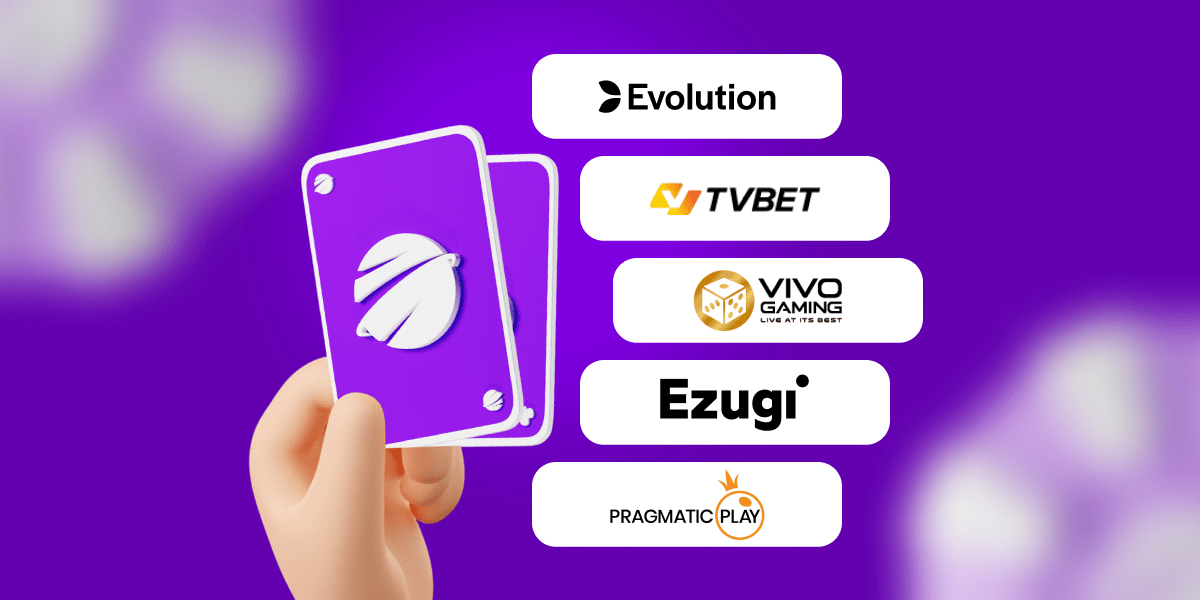
Vendor selection is a portfolio decision rather than a single contract. A major live dealer studio covers core formats, while a smaller casino game development company often fills gaps in localized games or VIP limits. Commercial terms usually combine a GGR revenue share with fixed fees for dedicated tables. Branded versions cost more but secure exclusive host schedules.
Evaluation works best on measurable criteria. Request per-table uptime history, stake ranges, and the number of tables approved in each target state. NuxGame extended its live catalog through a LuckyStreak partnership, and the same checklist applies when operators compare live dealer vendors through one aggregator:
- Supplier licensing status in every state on the launch plan.
- Studio redundancy: high-quality backup encoders, spare tables, and failover streams.
- Stake ranges covering casual players and high-limit VIP segments.
- Shift coverage and language options for 24/7 operation.
- API support for bet-behind, side bets, and round history retrieval.
- Loyalty programs for live tables, such as cashback on net losses.
Customization vs. Cost: Branded Tables and Localized Dealers
Customization runs on tiers, and each tier shifts the cost model. Branded tables add the operator’s logo, colors, and felt to studio tables, while dedicated tables also reserve dealers, hours, and stake limits for one brand. Localized dealers, such as Spanish-speaking tables, pay back only when their scheduled hours fill with matching traffic.
| Tier | What changes | Typical cost model | Best fit |
|---|---|---|---|
| Shared table | Nothing brand-specific | Revenue share on GGR | Launch phase |
| Branded table | Logo, colors, felt, lobby tile | Revenue share, often plus a setup charge | Brands building recognition |
| Dedicated table | Exclusive dealers, hours, and limits | Fixed monthly fee plus revenue share | VIP-heavy, high-traffic brands |
| Localized dealers | Language, host scripts, local promotions | Varies with shift coverage | Segments with proven volume |
Connecting Live Casino Tables With the Sportsbook
Shared accounts turn live content into a cross-sell channel. A sports betting customer who builds a slip at halftime already sits inside the same wallet and KYC profile, so a live table is one tap away. Without a shared balance, the same move requires a fund transfer, a second login, and a pause that often ends the session.
Bonus rules need separate treatment. Many brands count live table stakes at a reduced rate toward wagering requirements, because low-edge games clear bonuses quickly. Campaigns such as cashback for live roulette players who also follow NFL markets depend on one data model across verticals. The NuxGame sportsbook shares that model with casino modules and CRM triggers.
- Session handoff that keeps the player logged in from bet slip to table.
- Unified deposit, loss, and time limits covering both verticals.
- Game-weighting rules per product inside bonus terms.
- Shared player segments that feed retention triggers.
How to Integrate Live Dealer Content: A Launch Sequence
Most delays appear before any code ships. Supplier approvals, table allocations per state, and independent lab certification each follow their own timeline. Run these tracks in parallel with API development instead of queuing them after the build. Teams that add live dealer games to an existing platform face fewer steps, because KYC and payments already hold approvals.
The integration guide below follows a typical onboarding path on the NuxGame casino platform, from sandbox traffic to a full lobby. Each step carries an exit criterion, which keeps sign-off objective and holds half-tested games back from players. Scalability testing sits early, because retrofitting capacity after launch costs more than sizing it upfront.
- Sandbox connection: debit, credit, rollback, and round-history endpoints pass against test tables.
- Load test: peak concurrency on unlimited roulette and bet-behind blackjack clears without duplicate debits.
- Geolocation and limits: sessions outside permitted states are blocked, and limits trigger before debit.
- Lab certification: the integration passes independent testing and regulator submission.
- Soft launch: a limited set of games runs while the team tracks late-bet rejections and reconciliation gaps to optimize the lobby mix.
- Full rollout: the complete lobby opens with live dealers on every approved table.
Technical Snapshot
The requirements below apply across live dealer platforms, whether content arrives through direct studio contracts or an aggregator.
| Area | Requirement | Indicator to monitor |
|---|---|---|
| Wallet API | Debit, credit, and rollback with idempotency keys | Callback response time; duplicate debit count |
| Stream delivery | WebRTC primary, HLS fallback, real-time streaming at the edge | Glass-to-glass delay; rebuffer ratio |
| Studio data | Round events with OCR plus sensor confirmation | Share of rounds held for review |
| Compliance | Geolocation, supplier licenses, PCI DSS v4.0.1 | Blocked-session accuracy; audit findings |
| Reconciliation | Daily ledger match against provider round logs | Unmatched transaction count |
| Capacity | Bet and event services with horizontal autoscaling | Peak concurrent sessions per table |
Where Live Content Fits Your Roadmap
The decision rarely hinges on whether to offer live dealers; it hinges on which layer the business owns. Direct studio contracts give pricing leverage but multiply wallet contracts, audits, and state filings. Aggregated access trades a margin share for one API, one reconciliation feed, and faster expansion as new states open for iGaming. For lean engineering teams, the second model usually frees sprints for lobby design and CRM rather than callback maintenance.
NuxGame supports both routes. The turnkey platform delivers live dealer functionality with wallet, KYC, bonus, and reporting modules already connected, while the API route plugs studios into an existing stack. Request a NuxGame demo to review table lists per state, wallet callback behavior, and the reconciliation reports your compliance team will receive.