Русский
 Opportunities for Expanding the Sports Betting Business in 2026
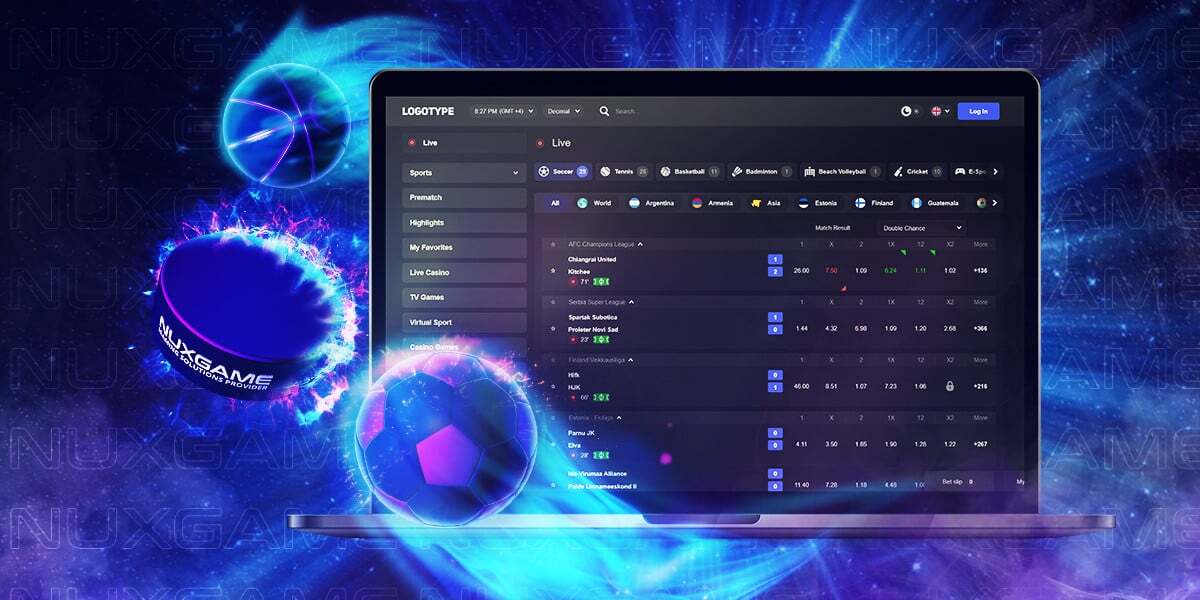
Expanding a sports betting business in 2026 rarely starts with a new state. U.S. commercial sportsbooks accepted $166.94 billion in wagers during 2025 and kept $16.96 billion, a 22.8% revenue increase. Growth now sits in three places: casino cross-sell, event-driven acquisition, and margin defense under heavier taxation. Each one is an engineering decision before it becomes a commercial one.
June 2026 showed why the question matters right now. New York booked a record $2.3 billion handle and held 5.19%. The state received $59.7 million, against $105.3 million a year earlier. A single-vertical book absorbs that swing alone, with no second revenue line to cushion it. NuxGame supplies the sportsbook, casino aggregation, wallet, and back-office layers operators combine to spread that exposure across products.
Key Takeaways
-
Per-wager fees, not tax rates, decide which bet types stay profitable.
-
Online casino revenue rose 27.6% in 2025 and cushioned weak hold months.
-
Bet acceptance above 300 ms at p95 leaks in-game volume.
-
PCI DSS v4.0.1 payment-page controls cover every cashier release since March 2025.
-
Only 55.9% of origins pass Core Web Vitals; odds boards fail INP first.
Where U.S. Sports Betting Growth Comes From in 2026
Thirty-nine states plus Washington, D.C. have authorized wagering, and roughly 30 run statewide online sports betting. The remaining holdouts — California, Texas, Georgia — are stalled by tribal politics and constitutional mechanics. Sports betting revenue reached $16.96 billion in 2025 against $13.7 billion in 2024, per the AGA commercial gaming tracker. Waiting for another state to legalize is no longer a growth plan.
The World Cup then redrew the calendar. Handle across the top ten states rose 23.5% year over year in June, clearing $7 billion for the month. Maryland bettors staked $62.6 million on soccer alone, up 248%, which pushed it ahead of MLB and NBA volume there. Cricket, through Major League Cricket and ICC events, stretches the summer further.
Three expansion vectors remain open inside the existing betting market:
- Vertical cross-sell inside one player account and one balance
- Reactivation around fixed calendar peaks rather than always-on spend
- Depth plays: retail kiosks, agent networks, and B2B supply into each regulated market
Tax Topology and the New Margin Math
Illinois is the clearest stress test in legal sports betting. Operators pay 20–40% on adjusted gross revenue, then $0.25 on each of the first 20 million wagers and $0.50 after that. Chicago adds 10.25% on top, from January 2026. The Illinois Gaming Board reported May handle down roughly 10% year over year, while state receipts climbed 20%. Per-wager fees tax volume, not profit.
| Jurisdiction | Online tax structure (2026) | Effect on product and pricing decisions |
|---|---|---|
| New York | 51% of GGR | No promotional deduction; parlay mix carries the margin |
| Illinois | 20–40% of AGR + $0.25–$0.50 per wager + 10.25% Chicago | Low-stake, high-frequency bets turn negative; minimum stakes rise |
| New Jersey | 19.75% of GGR | Casino cross-sell subsidizes sportsbook volatility |
| Tennessee | 1.85% of handle | Tax falls due even in a losing month |
| Nevada, Iowa | 6.75% of GGR | Room for wider pricing and larger bonus budgets |
A federal layer landed on January 1, 2026. Bettors may deduct only 90% of wagering losses, while the W-2G reporting threshold rose from $600 to $2,000. High-volume sports bettors now face tax on break-even years, which pushes a slice of them toward offshore books. The FAIR BET Act still sits with the House Ways and Means Committee. Per-state contribution margin belongs in the model before any launch commitment.
Portfolio Expansion: Casino Cross-Sell, DFS, and Prediction Markets
New Jersey ran this experiment in public. Betting revenue fell 38% in June as hold dropped to 6.24% from 11.62%, while casino sites took $271 million in GGR, up 17.5%. Online gaming taxes alone nearly doubled the combined take from land-based casinos and sports betting. DraftKings’ Connecticut book closed the same month at a $4.86 million loss, with statewide hold at 2.33%.
Adjacent products each arrive with their own rulebook. Prediction markets have diverted over $1 billion in potential state gaming taxes since early 2025. Super Bowl LX contracts traded above $1.6 billion. The CFTC continues to assert exclusive jurisdiction while states litigate, and Illinois now taxes exchange wagers at 1.75%, rising to 3.5%. Daily fantasy sports sit in a third framework, with separate eligibility rules by state.
Operators ask us how to protect a quarter from one bad month of results. The answer is portfolio design, not sharper trading. A book selling only match outcomes inherits every upset on the calendar. Pair sportsbook liquidity with casino cross-sell, keep one wallet behind both, and a soft June stops rewriting the annual plan.

Denis Kosinsky
Chief Product Officer at NuxGame
Bet Acceptance and Wallet Synchronization
Trading systems fail quietly long before they fail loudly. A betting stack ingests prices, quotes markets, accepts stakes, and settles. Each step carries its own latency budget. Feed suspension during in-game events has to propagate faster than a bettor can tap confirm. Acceptance on a price that has already moved becomes a trading loss, not a UX complaint.
Feed ingestion and latency budgets
Put the numbers in the integration contract rather than the sales deck. Workable targets: p95 bet acceptance under 300 ms, real-time odds propagation under 500 ms, market suspension under 200 ms. AI-assisted pricing shortens reaction time on live markets, though it raises the cost of stale data. Every rejected bet needs a stored reason code.
- Price-change tolerance defined per market type
- Reason-coded rejections exposed in the back office
- Suspension propagation monitored per feed, not per platform
- Bet requests replayable for dispute resolution
Seamless wallet synchronization and settlement
A seamless wallet holds one balance across sport and casino, debiting the operator ledger at placement instead of transferring funds between products. Idempotency keys stop double debits when a client retries a timed-out call. Settlement, cash-out, and void events reconcile on a cycle short enough to catch drift inside one session. Wallet call timeouts near 150 ms stop placing bets from stalling at the confirm step.

Performance-First Front End: Sub-Three-Second Mobile Load
Google grades the field, not the lab. LCP under 2.5 seconds, INP under 200 ms, and CLS under 0.1 must hold at the 75th percentile of real sessions. Only 55.9% of tracked origins passed all three in May 2026 CrUX data. An odds board re-rendering every second is an INP defect before it is a design choice.
Peak concurrency is the second constraint. A World Cup final concentrates the year’s peak concurrency for an online sportsbook into two hours. Read replicas for the odds board, cached fallbacks, and queued non-critical calls keep the betting website transacting when marketing traffic lands. Multi-AZ failover follows the well-architected reliability guidance published by AWS.
A user-friendly betting experience on mid-range Android hardware is won in the rendering budget:
- LCP ≤ 2.5 s, INP ≤ 200 ms, CLS ≤ 0.1 at p75, mobile first
- TTFB under 200 ms from the edge
- 99.95% monthly availability on bet placement endpoints
- MTTR under 30 minutes for feed degradation
Cashier Engineering: Payments, KYC, and PCI DSS Scope
The cashier is where compliance and conversion collide. PCI DSS v4.0.1 is the only active version, and its 51 previously future-dated requirements have applied to every assessment since March 31, 2025. Requirement 6.4.3 covers script authorization on payment pages; 11.6.1 demands tamper detection on headers and page content. Login and deposit endpoints also draw credential stuffing traffic around every major event.
Approval rates then decide deposit economics. Track authorization rate by method, first-deposit completion, and KYC decision time, with document checks clearing most applicants inside two minutes. AI-assisted document and behavior screening shrinks manual review queues, though each automated decline needs a human appeal path. NuxGame runs AML and KYC workflows next to payment routing, so payout approvals and risk flags share one record.
Regulatory UI: Responsible Gambling and Trust Signals in the Layout
Compliance surfaces belong in the user experience, not behind a settings menu. A persistent responsible gambling bar, one-tap deposit limits, session timers, and visible self-exclusion answer gambling regulations and cut escalated complaints. License identifiers, regulator links, and 21+ markers carry the authoritativeness that players and answer engines both read. WCAG 2.2 AA contrast and 24-pixel targets keep a betting site usable one-handed.
Evidence matters as much as the interface itself. Limit changes, cool-off requests, and intervention triggers need timestamped logs that survive a regulator review. Geolocation checks run per wager, not per session, in every state where the license applies. Published payout terms and a named license number build trust faster than any promotion. They also keep the brand compliant when trustworthiness is questioned publicly.
Expansion Models: Turnkey, White Label, or API-Only
Questions about how to run a bookie business reduce to three ownership decisions. A turnkey build hands the operator front end, player account management, and back office under one contract, with configuration control retained. White label trades margin and product control for someone else’s license and market-access partnership. API-only integration suits an existing gaming business that already owns its PAM and compliance function.
Migration is where these projects slip. Player balances, open bets, bonus states, and KYC records move under audit, usually with dual-running across one full settlement cycle. A solution for bookmakers should expose bet history and wallet ledgers through documented endpoints before any cutover date is agreed. The NuxGame betting API exposes those endpoints, so betting platforms migrate one layer at a time.
Acquisition and Retention After the Deposit Wave
Event peaks attract new customers at a lower cost than steady-state advertising. Where per-wager taxes apply, welcome bonus eligibility must be tied to market type. Otherwise promotional cost scales with bet count instead of stake. Affiliate deals, SEO, and paid digital marketing carry different payback windows, and casino marketing budgets usually recover faster than sportsbook budgets do. Measure customer acquisition cost per state, not per brand.
Retention is the harder half of the same equation. FanDuel and DraftKings took roughly 59% of Michigan online wagers in June. Challengers compete on product depth rather than share of voice. World Cup depositors return for football season when segmentation is data-driven and the first contact is actionable: relevant markets and betting strategies content over a generic free bet. The NuxGame gamification and loyalty toolset configures VIP tiers and bonus rules without a release cycle.
Technical Snapshot
| Layer | Requirement | Verification or target |
|---|---|---|
| Odds feed | Pre-match and live coverage priced in real time, suspension control | Suspension under 200 ms, monitored per feed |
| Bet acceptance | Price-change tolerance, reason-coded rejections | p95 under 300 ms at peak concurrency |
| Wallet | Single balance, idempotent debits | 150 ms timeout, session-level reconciliation |
| Payments | PCI DSS v4.0.1 scope, including 6.4.3 and 11.6.1 | Annual assessment plus script inventory per release |
| KYC and AML | Automated screening with appeal path | Decision time and manual-review ratio tracked |
| Front end | Core Web Vitals, WCAG 2.2 AA | LCP ≤2.5 s, INP ≤200 ms, CLS ≤0.1 at p75 |
| Availability | Bet placement and cashier endpoints | 99.95% monthly, MTTR under 30 minutes |
| Reporting | Per-state tax, bet counts, RG events | Regulator-ready export, immutable event log |
| Bonus engine | Eligibility by market, stake, and state | Cost per state modeled before launch |
Deciding the Next Expansion Increment
Rank the options by contribution margin after local tax, then by the engineering capacity each one consumes. A new state with a 51% rate and no promotional deduction earns less than a casino vertical launched into an existing player base. Sports betting as a business now rewards operators who can price a market, a tax structure, and a latency budget in the same review.
The sequencing insight is short enough to act on. Fix hold volatility with product mix, acquisition cost with calendar timing, and reporting with a stack that files per state. That order keeps capital in the ground the longest. It also cuts the number of vendors pulled into every audit.
The NuxGame team maps sports betting business development plans against the platform capability behind them: feeds, casino aggregation, payments, KYC, and reporting. A product demo shows how those layers are configured before any contract is signed.
Send your target states and current stack to the team through the contact form. The conversation then starts from betting business solutions that fit the license you already hold.