Русский
 Best Sports Betting Software: How to Choose the Software Solutions for Operators
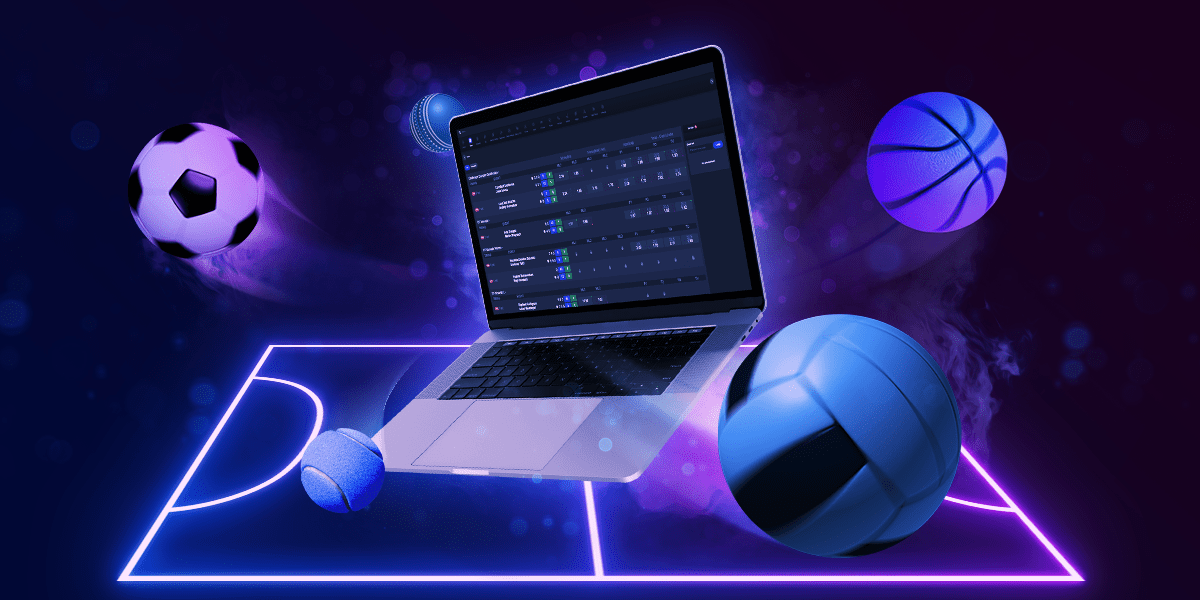
Sportsbook selection usually starts with a demo and ends with a contract nobody stress-tested. The best sports betting software is judged on four measurable things: odds feed latency, market depth, risk configuration and certification coverage. Interface design copies easily, and the data path behind it does not.
At that hold, a two-second repricing lag on live markets is a margin defect rather than a design complaint. Every added state license brings its own certification, reporting and geolocation obligations. The NuxGame sportsbook platform covers 125+ sports and 3,000+ markets through one feed integration. Operators keep back-office control over limits, pricing and payment routing.
Key Takeaways
-
Micro-betting markets reprice every 200–500 ms while broadcasts run 7–30 seconds behind, and sharp money prices that gap.
-
Feed recovery design — sequence numbers, snapshot replay, reconnect jitter — protects uptime more than any advertised latency figure.
-
Several US states tie tier-two settlement to official league data, turning a data source decision into a license condition.
-
PCI DSS v4.0.1 requirements 6.4.3 and 11.6.1 govern deposit page scripts and have been mandatory since March 31, 2025.
-
Migration risk concentrates in open bets, wallet cutover and bonus liability, none of which appear in vendor pricing.
What Sports Betting Solution Includes Beyond the Bet Slip
A sportsbook is not a single product. It has seven subsystems with separate failure modes, service levels and vendors. Teams that buy a betting platform often inherit separate contracts for odds data, trading, payments, geolocation, identity, reporting and support. Counting those contracts before signature prevents unpleasant discoveries during certification.
- Data layer — odds feed, results, statistics and streaming rights across sporting events
- Trading and risk — pricing, liability, suspension and settlement
- Front end — coupon, bet slip, cash-out and match trackers
- Player account management — registration, KYC, wallet and player protection tools
- Payments — provider routing, withdrawals and reconciliation
- Compliance services — geolocation, AML screening and regulatory reporting
- Back office — limits, bonuses, affiliate and agent systems, reporting
The NuxGame platform consolidates most of those layers behind one account system. Coverage runs to 3,000+ markets and 125+ sports and esports, with more than 210,000 events. Pre-match odds, live betting, match trackers, virtual sports and the back office share one transaction store. Fewer integration points leave fewer reconciliation gaps when a settlement dispute reaches the compliance team.
Odds Feed Architecture: Moving Real-Time Sports Betting Data to the Bet Slip
An odds feed is a message stream, not a file download. Providers push real-time data over WebSocket, and REST endpoints serve snapshots and recovery. Every message carries a market identifier, a sequence number, a price and a status flag. Miss one sequence and the odds screen shows a price the trading engine already retired.
Latency accumulates across five stages, and only two of them belong to the operator:
| Stage | Typical contribution |
|---|---|
| Venue capture to odds feed provider | Sub-second on official data |
| Provider delivery to operator ingestion | Network hop plus normalization of odds data |
| Pricing engine repricing | 200–500 ms on fast in-play odds |
| Fan-out and client render | Push delivery plus device paint time |
| Broadcast delay seen by the player | 7–30 seconds behind live sports |
Recovery design matters more than the headline latency figure. A reconnecting client requests a snapshot, replays the delta backlog, then re-enables bet placement. Betting data feeds fail in three ways: silence, duplication and drift. Teams that integrate the feed without a replay path end up pricing real-time betting data against markets nobody trades.
Odds API Providers, Coverage, and Pricing Models
Coverage is a rights question before it is a technical one. US sports leagues sell exclusivity, and Genius Sports holds exclusive NFL data rights for official play-by-play through 2029. Sportradar carries NBA, NHL, MLB and ATP rights, and its IMG ARENA acquisition added roughly 38,000 events. Concentration among odds providers at that level is an operator risk, not a footnote.
| Sourcing model | Latency profile | Commercial structure | Where it fits |
|---|---|---|---|
| Official league feed | Fastest, venue-collected | Fixed license plus per-sport tiers | States mandating official data for tier-two bets |
| Scouted sports odds feed | Adds a human capture hop | Flat fee or per-event pricing | Long-tail leagues and pre-match depth |
| Aggregated bookmaker odds | Follows the market | Call-volume tiers on a sports odds API | Price validation and trading oversight |
| Managed trading service | Provider prices and settles | Revenue share on betting turnover | Launches without an in-house sports trading desk |
Sourcing drives cost structure as much as speed. Illinois, Michigan and Virginia require official league data to settle tier-two wagers on commercially reasonable terms. Contracts for sports data feeds also cap redistribution, so retail partners and affiliates need separate permissions. Books carrying long-tail competitions blend sources: an official API feed for major sports and leagues, scouted coverage elsewhere.
Operators often ask us for the widest catalog available. The better question is which competitions actually carry your turnover, because you pay for the rest every month. We help clients match feed sourcing to their market mix and license conditions before they sign. Breadth looks impressive in a demo and expensive at renewal.

Denis Kosinsky
Chief Product Officer, NuxGame

Trading and Risk: Odds Updates, Bet Acceptance, and Margin Control
Margin is configuration, not luck. Sportsbooks held 10.2% of handle in 2025 according to the AGA commercial gaming revenue tracker. That percentage is the output of overround settings, stake factors and suspension speed. A single scoring event moves multiple betting markets at once. Automatic suspension on that trigger remains the highest-value rule in any book running in-play betting.
Controls that decide whether a live market survives contact with sharp money:
- Stake factoring by player risk group across different betting products
- Liability caps set per betting market and per selection
- Acceptance delay applied to volatile live odds updates
- Cash-out suspension tied to market status
- Duplicate-account and syndicate patterns flagged from betting activity
- Price tolerance bands tuned for players shopping the best odds
- Integrity alerts routed to a named compliance owner
Bet acceptance is where policy meets code. A request revalidates price, limit, risk group and market status before it commits. Parlays and same-game combinations are the most popular betting options, and correlated legs concentrate liability. The UK remote technical standards require customers to choose whether price fluctuations are accepted, forcing a re-offer when they decline.
Latency, Throughput, and Session Continuity at Peak
Capacity planning follows the fixture calendar of the top sports, not the average Tuesday. During Super Bowl LIX, GeoComply logged 14,300 geolocation transactions per second across regulated states. One tier-one operator reported 16.6 million wagers and peaks near 70,000 bets per minute. Real-time sports data fan-out saturates before bet placement does, so the odds service degrades first.
Controls that hold a platform together on a peak fixture day:
- Stateless bet placement behind an autoscaling group
- Queue-backed settlement to decouple write spikes
- Jittered reconnect windows to prevent snapshot stampedes
- Read replicas for coupon and history queries, separate from live data writes
- Rate limits per token on public API access
Reconnect storms break more books than raw wager volume does. A dropped edge node returns thousands of clients at once, each demanding a snapshot. The AWS reliability pillar guidance documents the fault-isolation patterns that contain this. Cloudflare placed gambling and casino sites third among most-attacked industries in its Q4 2025 DDoS threat report.
Compliance Architecture: GLI-33, ISO 27001, and Reporting Obligations
Certification shapes the build, so it belongs in the sprint plan rather than the launch checklist. The GLI-33 event wagering standard separates requirements tested in a laboratory from operator controls audited on site. That split decides ownership: the provider proves system behavior, and the operator proves documented procedure. Confusing the two costs weeks in a state review.
What regulators examine in a wagering system build:
- Wager records, void logic and settlement audit trails
- Geolocation checks at session start and at defined intervals
- Player protection tools, limit cooling-off periods and self-exclusion
- Clock synchronization across acceptance and settlement services
- Log retention, access control and segregation of production environments
- Supplier assurance across the ICT supply chain
Multi-jurisdiction operators carry parallel obligations. UK security requirements map to ISO/IEC 27001:2022 Annex A controls, including logging and clock synchronization. A Malta Gaming Authority Type 2 license adds a system audit within 60 days of approval in principle. Each regulator wants its own evidence pack, and shared control mapping cuts duplicate audit work.
Payment Page Controls Under PCI DSS v4.0.1
Deposit pages carry a separate standard. The future-dated requirements of PCI DSS v4.0.1 became mandatory on March 31, 2025. Requirements 6.4.3 and 11.6.1 apply directly to cashier pages: script inventory, integrity monitoring and page-change detection. The Council opened a comment period in June 2026, so the control set will move again.
Payment Routing, Wallet Sync, and Settlement
A single wallet across a sportsbook and casino removes transfer friction and creates one authority for balance. It also creates one place to get concurrency wrong. Debit and credit calls need idempotency keys, because a retried wager must never charge twice. Synchronization delay above one second produces failed bets during the moments that matter.
Payment architecture then decides approval rates. Provider cascading reroutes a declined deposit to a second acquirer without returning the player to the cashier. The NuxGame turnkey stack handles 180+ currencies, with routing rules configured per market and per method. Withdrawal requests cannot be reversed into fresh deposits under UK player protection rules.
Deployment Models, Time to Market, and Migration Risk
Three deployment models dominate online sports betting. Turnkey delivers platform, content and back office under the license and operational stack of the provider. White label adds brand control while the provider remains the license holder of record. Self-managed licensing gives direct sports betting API access and full compliance responsibility in every jurisdiction.
Migration carries the risks nobody prices at signature:
- Open bets on unsettled events at cutover
- Historical odds feed and wager records needed for dispute resolution
- Wallet balance reconciliation and pending withdrawal states
- KYC re-verification where document standards differ
- Bonus liability and free-bet obligations mid-cycle
- DNS, session drain and release timing
Sequence matters more than speed. Freeze new market creation first, then set the legacy back office to read-only. Run settlement in parallel for one full day before cutting player traffic across. Operators moving mid-season should schedule the cutover against the fixture list, not the finance calendar.
Technical Snapshot
| Checkpoint | Working target | Failure signature |
|---|---|---|
| Real-time odds update, venue to client | 1–2 s end to end | Stale prices accepted, arbitrage losses |
| Bet placement endpoint, p95 | Under 300 ms | Slip timeouts during scoring events |
| Platform availability | 99.9% monthly, multi-zone | Market suspension during peak fixtures |
| Feed reconnect to reconciled state | Under 5 seconds | Duplicate or missing market states |
| Wallet debit and credit | Idempotency key per transaction | Double debits, phantom balances |
| Geolocation checks | Re-check on session resume and state change | Wagers accepted outside a licensed state |
| Clock synchronization | Drift under one second across nodes | Unresolvable settlement disputes |
| Peak capacity headroom | 3–5× last recorded peak | Reconnect storms, queue backlog |
Conclusion
Selection comes down to evidence. Ask any candidate for the best sports betting software to show p95 bet placement latency under load. Request a documented recovery sequence, a current laboratory report and a reference architecture for target states. Vendors answering with market counts alone have not faced hard questions before.
Then match the deployment model to the team you actually have. Operators without a trading desk gain more from managed pricing than from a self-managed license. Teams with in-house risk capability need configuration depth and a reliable odds feed. NuxGame supports both paths through modular delivery, feed integration and back-office configuration, so the betting experience stays stable while the sports betting ecosystem shifts.
Scoping a new build or replatforming an existing brand? The practical next step is a technical walkthrough. It covers the feed integration, wallet model, back-office controls and certification path for the states on your roadmap. Book a walkthrough with the NuxGame team.