Русский
How to Start an Online Casino: A Step-by-Step Guide for Operators
Learning how to start an online casino in 2026 involves nine steps. The first step is determining the target market. The last step is the first 90 days of operation. The time it takes to start operating after a white label brand is launched under a provider’s permit is three to eight weeks. An operator with its own Curaçao license on a ready-made platform takes three to six months, and a custom build adds almost a year of development. The date the permit is issued determines the launch window.
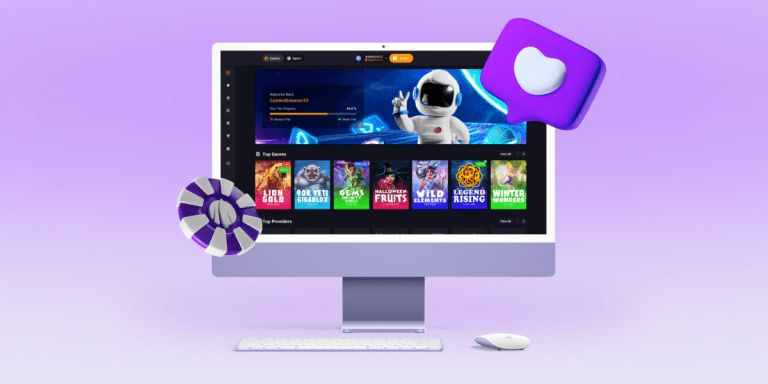
The guide breaks down each of the steps in detail and is followed by a timeline and a five line budget for the first year. The work done to set up a business is primarily done by the service provider when a new brand starts on a turnkey solution. The NuxGame casino platform, for example, links 18,500 games provided by 140+ game providers to the back office, the admin panel, where staff run the day-to-day operations of the casino.
Key takeaways
-
The first-year budget and the launch window are primarily determined by the permit and the launch model.
-
Payment provider onboarding usually takes longer than platform setup, so it begins right after company registration.
-
Budget-wise, the biggest cost is typically the game catalog. A premium catalog costs about 10x as much as a basic library.
-
Identity and age checks need to be completed before a customer is permitted to place their first real-money bet.
-
Issues related to payments and the game integration itself are best identified via a “soft launch”, which is performed during a limited release to the general public.
Step 1: Choose a Target Market and Jurisdiction
After defining a target market, the operator can decide what license it needs, and which payment methods it should support. Different jurisdictions have different taxation rules and regulate player protection in different ways. Certain jurisdictions, like the United Kingdom, Germany, and Ontario, issue their own local permits. Operators that don’t target regulated jurisdictions often work under an international permit issued from Curaçao or Anjouan. Before considering a jurisdiction in more detail, the team assesses the following:
- Legal status: Whether online casino games are legal, illegal, or tolerated. Also, if an international permit is accepted.
- Tax and fees: The tax and fee percentage of GGR, which sets the margin.
- Payments: The payment methods accepted by players, and if local banks work with payment processors.
- Languages and content: Language and content support needed, and the types of games that are popular in that region.
- Competition: The number of brands that already have a license and operate in the same jurisdiction.
A regional overview of iGaming regulations helps identify a few of the most attractive jurisdictions. Each market addition includes its own license and payment system, so normally the first market added for a new brand is the only one for a while.
Differences exist for the U.S. market, though, since real-money online casino games are legal only in a few states. Some casino brands in other states employ the sweepstakes model, where players redeem virtual coins for prizes. However, California and New Jersey banned this model in 2025.
Step 2: Choose a Launch Model (Turnkey, White Label, or Custom Build)
The launch model determines who holds the license and what share of the revenue goes to the operator. A white label model runs on a provider’s license and payment contracts, and a turnkey model runs on the operator’s license and uses a prefabricated solution. A custom build model means the operator designs and builds the solution.
| Criterion | White label | Turnkey | Custom build |
|---|---|---|---|
| License holder | Provider | Operator | Operator |
| Setup or build cost | €10,000–€60,000 | 40,000–150,000 | 200,000–500,000+ |
| Provider share of revenue | 10%–30% of GGR | 2%–5% of GGR | None, but salaries for engineers instead |
| Time to launch | 3–8 weeks | Days to weeks once a license and payment provider are ready | 9–14 months |
| Control over markets and player data | Limited | Full | Full, including the code |
Ranges are planning bands for budgeting. Revenue share bands are based on industry overviews.
A white label model is a good first test of a market, since a brand can skip the license application. The more income a casino generates, the more a service provider benefits from a shortcut, in this example €20,000 a month with a 20% share of €100,000 of GGR. A white label vs. turnkey comparison shows at what point a license of the operator’s own starts to pay off.
Custom development is usually only worth it for a large group that already has an engineering department and needs features no vendor offers. Other groups typically start with out-of-the-box software that frees up 9 to 14 months for market entry and player acquisition.
Using a ready-made platform to launch a casino has the added benefit of covering payment processing and a range of casino games. The NuxGame turnkey solution provides an all-inclusive package, offers legal services to assist with picking a suitable jurisdiction and prepares the documents for the gambling license.
Step 3: Apply for a Gambling License
A gambling license is issued to the operator’s company and a review usually takes the longest before launch. Curaçao changed their system with the National Ordinance on Games of Chance (LOK), in effect from December 24, 2024. Now, operators apply to the Curaçao Gaming Authority and won’t need a master license holder to issue a sublicense. The average time it takes to review a complete application looks like this:
- Anjouan: 4 to 8 weeks, with low fees and less stringent requirements than other offshore regulating bodies.
- Curaçao: About 2 to 4 months with the LOK
- MGA: 4 to 6 months with a review of the technical setup.
- UK Gambling Commission (UKGC): a target of 16 weeks for operating license decisions in Great Britain, which the regulator does not guarantee.
Regulators generally ask for the same core information; however, the depth and detail of background checks varies. This is comprised of information on company and ownership structure, source of funds and AML policy. The UKGC cites application complexity and ownership structure as reasons it misses its 16-week processing target.
Game certificates are also part of the file. An accredited test lab confirms that the random number generator used in an online gaming system is working as it should. A gambling license guide identifies the documents and information each regulator requires and, under the white label model, this responsibility falls to the provider.
Step 4: Set Up the Company, Bank Account, and Payments
Setting up payments tends to take longer than the platform integration, because banks and payment processors also run their own background checks. As such, payment setup is initiated as soon as the company has been incorporated, and runs concurrently with the review of the gambling license. It typically happens as follows:
- Incorporate the company in the regulator’s preferred jurisdiction, which is often the licensing jurisdiction.
- Open a corporate bank account at an institution that supports gambling clients, as many banks refuse to provide these services.
- Sign a Payment Service Provider (PSP) to link the cashier (the website’s deposit and withdrawal function) to payment methods and local card schemes. Simultaneously, sign an acquiring bank to settle Mastercard and Visa transactions.
- Agree on a rolling reserve: a percentage of card volume that the acquirer sets aside for several months to cover chargebacks, meaning payments that the issuer later reverses after a player dispute.
- Include local payment methods and cryptocurrencies that are already in use by players in the market.
- Test deposits and withdrawals with real accounts before going live.
Visa and Mastercard immediately put the operator under PCI DSS, version 4.0.1, the payment industry’s data security standard. Most brands keep card details on the PSP’s hosted payment page and do not retain card details in their own systems. Therefore, most of the PCI DSS requirements stay with the PSP.
Payouts impact player trust more than deposits, as money is instantly available on site, and payouts via check or EFT can take days to process. A payment methods guide for iGaming provides an overview of various payment methods with regards to fees and speed of payouts.
Step 5: Set Up the Platform and Games
The ‘platform’ or software in the iGaming industry is the back office and payment processing software for players. Several services integrate with it to offer features like bonus management and payments to players. ‘Turnkey’ and ‘white label’ models mean the service provider has already built and tested the software, and the operator’s work is configuration and content management.
What Happens Behind Each Bet
- The front end (what the player sees) receives the action.
- The API gateway routes the request to the right service.
- The game engine calculates the outcome.
- The wallet is updated.
- The action is displayed to the player.
Responses under 50ms reduce latency enough for the game to play smoothly. Delays over 100ms increase the likelihood of timeouts. The wallet is typically the limiting factor. If a balance confirmation is delayed, the engine can retry the request and cause a duplicate bet or balance confusion. Isolation of services and strict timeouts keep these issues from happening across the site.
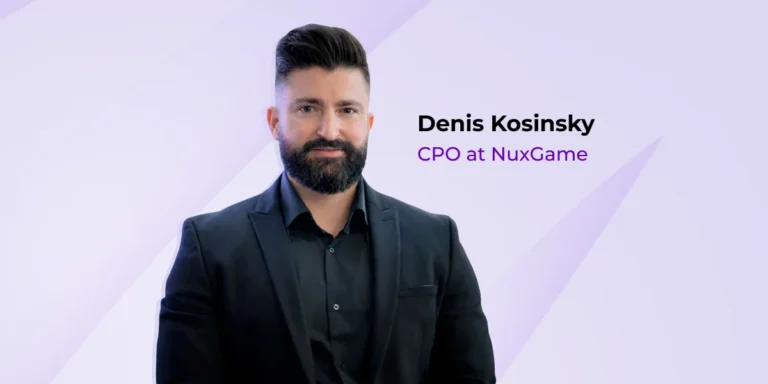
iGaming today is less like running a casino and more like conducting an orchestra where every instrument plays in milliseconds. If one section falls out of sync, the audience hears it instantly. The industry is now defined by systems that must stay synchronized while processing thousands of real-time transactions.

Denis Kosinsky
Chief Product Officer at NuxGame
Building the Game Library
Players judge a new casino by its lobby, so the game mix follows the target market. An aggregator brings hundreds of studios into a lobby quickly, while a direct integration brings more control over one developer’s games.
RTP (return to player) varies between 92% and 98%, indicating that, on average, a game will pay back between 92% and 98% of the stakes over its lifecycle. A lower RTP means higher margin per spin, but players notice when a game pays out less.
There are a number of studios connected via the NuxGame game aggregator, including Evolution, Pragmatic Play, and Playtech. The back office allows the operator to place studios in the lobby in a specific order, and cross-provider bonuses. Reports allow the operator to see revenue by game provider and title, and break it down by player.
Step 6: Build KYC, AML, and Responsible Gambling Controls
KYC verifies a player’s identity, and AML follows transactions on and off the account. Responsible gambling tools allow players to set limits or breaks. All of the above are conditions of the operator’s license, and are triggered at different stages of the account’s life cycle.
| Control | What it checks | When it runs |
|---|---|---|
| Age and identity checks | Against government ID or official records | At account opening, prior to first bet |
| Sanctions and PEP Screening | Against sanctions and politically exposed person (PEP) lists | At account opening, and when lists change |
| Source of Funds | Verification of large deposits | At the time of a large deposit |
| Transaction Monitoring | Unusual or high risk activities | All of the time |
| Deposit and Time Limits | Player set limits | At account opening, or later changed |
| Self-Exclusion | A time-out of the player's chosen duration | Upon request, and via national registers where available |
Great Britain illustrates how strict the rules can be. From the 7th of May 2019, all British licensees were required to verify the identity of their customers by checking their name, address and date of birth, prior to allowing that customer to partake in any gambling, as stipulated by the UKGC. Should a regulator allow checks to be performed at a later stage, brands that perform checks at the first withdrawal often end up with blocked payouts and a barrage of player complaints.
Take a closer look at KYC in online gambling, to better understand the types of documents and providers. Most of these providers are integrated within a gambling platform via an API, and the checks are performed within the registration process.
Step 7: Launch the Website and Mobile Version
It is the case for most new entrants, as they decide how to create an online casino website, that they opt for a template for the website and mobile versions. Working with a template means the website and mobile versions of the product can be launched in a matter of days. A custom website and mobile version can take weeks to be developed and integrated with the gambling product, as it goes through the provider’s queue.
A brand has the freedom to build a custom design for a mobile version and website, and integrate it with the gambling platform via an online casino API. The design team controls the speed of the website, and pages. The gambling platform retains control of the game sessions, and the balance.
Phones are increasingly more important than desktop computers for the majority of the brands. According to the European Gaming and Betting Association (EGBA), mobile devices accounted for 58% of the total revenue generated by the online gambling market in Europe in 2024. Many brands still don’t launch a native app because Apple and Google currently only accept real money gambling apps from licensed operators in specific countries.
Pro Tip: Before your launch, be sure to complete a full registration, deposit and withdrawal from a mid-range Android device using mobile data. The vast majority of new players connect to your site this way, and testing on desktop from the office using Wi-Fi hides cashier and other errors.
Step 8: Plan Marketing and Affiliate Partnerships
Marketing work starts once a license is applied for, as affiliate deals and content take several months to prepare to bring players to the site. Many regulators restrict wording for bonuses and where gambling ads are permitted. The first year the acquisition is typically spread across the four channels below:
- Affiliates: The most popular first year channel is working with partner sites and/or streamers to send first time depositing players for a revenue share or fixed CPA.
- Content: Articles and search engine optimization (SEO) to capture organic and slowly growing traffic. Once the content is published, the traffic brings players at no further cost.
- Paid media: Advertising in search or social, where gambling ads are allowed.
- Retention: Use customer relationship management (CRM) software and/or programs to offer players bonuses and implement retention campaigns to players who have already deposited.
A blended CAC ($150 to $400) works well for a first year stress test, and real figures vary based on the channel. Affiliate payouts occur later. In a hypothetical case, a 35% share of $600 in NGR (net gaming revenue, after bonuses and fees) from one player means $210 for the partner.
Step 9: Go Live and Manage the First 90 Days
The final stage of opening an online casino is the ‘soft launch’ where the website is presented to a small audience for a period of one to two weeks. Real money bets made during this ‘soft launch’ help identify issues that test accounts may not show. The cost to fix such issues is also comparatively low.
Go-Live Checklist
| Checkpoint | What it Means | Owner |
|---|---|---|
| Payment Routes | Real money is deposited and withdrawn using all the payment routes offered on the website. | Payments Manager and PSP |
| Game Sessions | Each game opens, settles bets and sends results to the player’s wallet. | Platform Provider |
| Verification Flow | Before a player is allowed to make a real money bet, the account is verified by the platform’s KYC process. | MLRO (Money Laundering Reporting Officer) |
| Player Protection | Limits and self-exclusion are features that help protect the player and are easily accessed from the user account. | Compliance Team |
| Support Coverage | During the first 90 days, coverage is prioritized for languages available for support during live chat and email. | Support Lead |
| Monitoring | Alerts are set to fire for slow API responses and payment transactions. | Platform Provider and Operator |
First 90 Days
- Days 1–30: Monitor first time deposit traffic and divert it away from unapproved payment routes.
- Days 31–60: Compare first time deposit traffic by channel. Terminate affiliate partnerships for channels that do not generate return players.
- Days 61–90: Change lobby based on most popular games and plan the next payment/market method.
During the first few weeks, new players contact support about bonuses and payouts. Advice on staffing and the methods to contact player support is included in a practical guide to casino customer service.
Monitoring includes tracking player behavior from the first day. Rapidly increasing deposits and long sessions without breaks may trigger the responsible gaming measures set earlier. Regulators check these during audits.
How Long It Takes to Launch an Online Casino
Several things are happening in parallel, so the overall time is determined by the longest duration of the processes in each step. In the majority of cases, it is determined by the review of the casino license and payment onboarding.
| Stage | Duration | Runs in parallel with |
|---|---|---|
| Step 1: Selecting the Market and Jurisdiction | Usually takes 1–2 weeks | Runs in parallel with Step 2 |
| Step 2: Selecting the Provider and Signing the Agreement | Usually takes 1–2 weeks | Runs in parallel with Step 1 |
| Step 3: Reviewing the License | 4–8 weeks (for Anjouan), 8–16 weeks (for Curaçao), 16–26 weeks (for Malta) | Usually run in parallel with steps 4, 5, 7, and 8 |
| Step 4: Company and Bank Setup | 2–8 weeks | Step 3 |
| Step 5: Platform and Games Setup | 1–3 weeks | Step 3 |
| Step 6: Responsible Gaming, KYC and AML Setup | 1–2 weeks | Step 5 |
| Step 7: Website and Mobile versions | 1–3 weeks | Step 3 |
| Step 8: Marketing and Affiliate Setup | 2–4 weeks | Step 3 |
| Step 9: Soft Launch | 1–2 weeks |
The total time is 12-26 weeks for a Curaçao license. Most delays are caused by payment providers and incomplete license files, so both are initiated as early as it is practical to do so. The last two weeks prior to soft launch consist of work that requires the license, including final payment tests in the live domain.
Budget to Start an Online Casino
The launch model and the license determine the base of the budget just as they determine the timeline. The table shows first-year ranges for one market on a ready-made platform.
| Budget line | Year-one range ($) | What sets the figure |
|---|---|---|
| Platform | 40,000–150,000 | A ready-made launch package. A custom package is at least $200,000. |
| License | Approx. $57,000 | Curaçao: €4,592 application + €47,450 annual fees |
| Games | 50,000–500,000 | Based on the game content, a small game catalog versus a larger game content catalog from premium game studios. |
| Payments and KYC | 2,000–4,000+ | Verification plan minimums and PSP setup fees |
| Marketing | 75,000–200,000 | 500 first-time depositors at a CAC of 150–400 |
The first year with front-end design and cash reserves for card payments brings the total cost to $245,000 to $975,000 with a ready-made platform. A detailed breakdown of costs for starting an online casino is provided, outlining each line item with a built-from-scratch scenario.
For the licensing fee, it is assumed that the casino is licensed in Curaçao, where the regulator publishes fees under the LOK. Regulated European markets charge more for gaming licenses due to compliance and local taxes.
Bottom Line
Most of the steps outlined above happen concurrently, but two steps cannot be rushed: the licensing review, and the payment processor integration. Licensing reviews and payment processor integration determine the launch date, making them the first steps in any plan for how to start online casino business operations.
A white label casino is good for an operator who wants to launch in a single jurisdiction in under 2 months. Operators who are looking to gain access to multiple licensed markets are better served with a turnkey platform, where the provider’s share of revenue remains small.
A free demo is available. During the demo, the NuxGame team shows how the casino and sportsbook front ends function.