Русский
 Getting iGaming Payments Right in the US, Straight From Fyntek CEO Alexander Rea
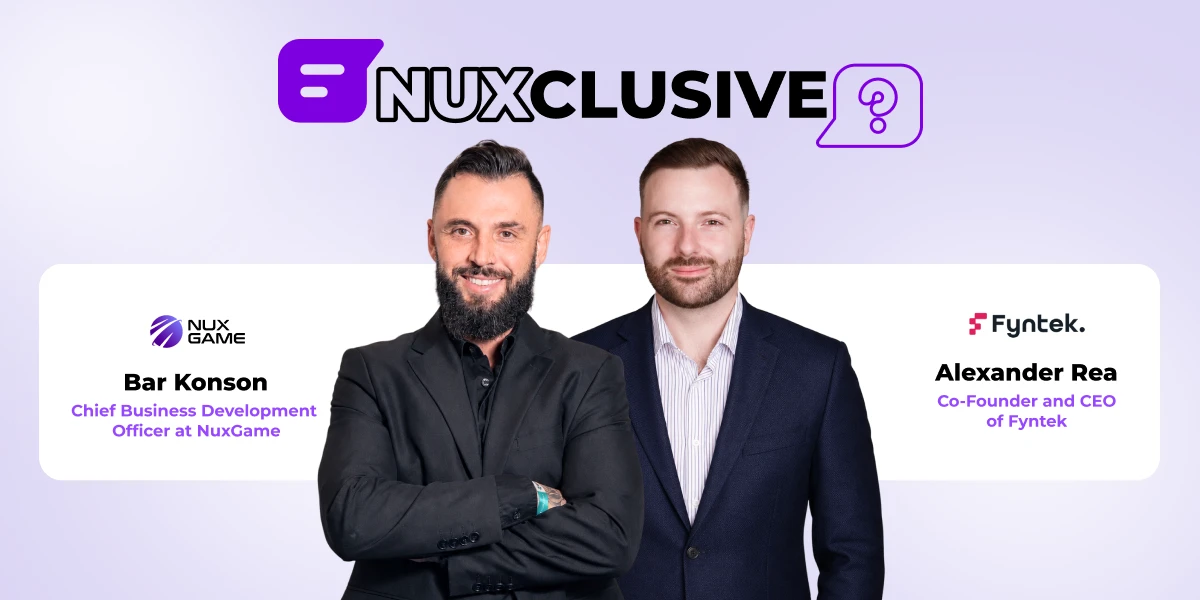
A Nuxclusive conversation with Alexander Rea, Co-Founder and CEO of Fyntek. In short: iGaming payments in the US are harder to get right than the product itself. Getting approved by payment providers takes far more preparation than most operators expect, relying on a single payment route becomes a serious risk as soon as traffic grows, and how quickly players can withdraw their winnings affects retention just as much as how easily they can deposit.
Only a handful of states run licensed online casino play, so a large share of US-facing growth now happens through the sweepstakes model, and that segment spent 2026 under real pressure. California’s ban took effect on January 1 and pulled payment providers inside the enforcement line, and other states tightened their own rules as the year went on. When the map keeps changing quarter to quarter, payments stop being a back-office checkbox and become the thing that decides whether an operator can actually collect revenue and pay winners.
As an online casino software provider working with teams entering this market, NuxGame keeps meeting the same pattern: a business that has planned everything except how its money will move. So for this episode we went to someone who lives inside that problem every day.
Bar Konson, Chief Business Development Officer at NuxGame, sat down with Alexander Rea, Co-Founder and CEO of Fyntek, the payments orchestration platform NuxGame partners with for US sweepstakes payments. Fyntek connects operators to hundreds of payment providers through a single API, and Alexander has spent years watching which operators get this right and which ones get stuck. The conversation gets specific fast: what to prepare, what breaks, and what to measure.
Bar: Alex, good to finally sit down and talk payments with you. I want to start where a lot of operators start, which is underestimating. We see teams arrive with a polished product and a real growth budget, with payments almost the last thing on the list. From where you sit, what do operators most underestimate about payments when they move into the US iGaming and sweepstakes market?
Alexander: That the PSP compliance and underwriting process is far more involved than they expect. Many operators assume onboarding is a quick formality, then get caught unprepared for the depth of underwriting: the documentation, business history, ownership details, and processing context that providers want before approving an account. That lack of preparation is often what leads to declines or limitations on processing. The good news is it doesn’t have to be painful. We’ve done this so many times at Fyntek that we can guide operators through it, help them present everything the right way up front, and limit the chances of getting declined or capped. With the right preparation, compliance is usually smoother and faster than people assume.
Bar: That matches what we see on the platform side. The operators who treat underwriting as a real exercise rather than a rubber stamp are the ones who launch on time. It is also why we treat iGaming payment solutions as part of the launch plan instead of something you bolt on at the end. So let’s discuss timing. When an operator is expecting fast player acquisition right from the start, what should payment readiness look like before they go live?
Alexander: Ideally, redundancy is in place from day one: multiple PSPs, routing and cascading configured, reconciliation and reporting connected, and KYC/AML flows tested ahead of real volume. If you’re investing in acquisition, it helps to have some headroom on approval rates, because every percentage point matters once traffic ramps. The goal is to avoid leaning on a single setup right as growth kicks in.
Bar: The headroom point is one operators tend to learn the hard way. Approval rate looks fine in a quiet test, then acquisition doubles the volume and every lost percentage point turns into real money. I want to bring the player into it, though, because that is where retention lives for us. Where do payment flows create the most friction for players themselves?
Alexander: Usually in two spots. On deposits, declines and 3DS step-up authentication can interrupt conversion at exactly the wrong moment. On redemptions and payouts, slow or manual disbursements tend to frustrate players the most. Deposits naturally get a lot of attention, but the cash-out experience is just as influential when it comes to retention and loyalty.
Bar: Completely agree on cash-out. A player who deposits easily but waits days to get paid remembers the wait, not the welcome bonus. It is one of the quieter payment challenges in iGaming that shows up straight in your churn numbers rather than your support tickets. Once an operator gets past launch and starts scaling traffic, though, the pressure moves somewhere new. In your experience, what tends to break first when the volume climbs?
Alexander: Often it’s whatever bad actors find first. The moment you scale and become more visible in the market, you’re also on the radar of fraud rings and bonus abusers who actively test new operators for weak spots. They tend to probe the edges: promo and bonus flows, loose velocity limits, gaps between sign-up and verification, and any deposit endpoint that can be used for card testing. A setup that felt perfectly solid at modest volume can start to strain as that pressure arrives, since the same traffic growth that signals success also signals opportunity to people looking for vulnerabilities. It’s rarely a question of if you’ll be tested, more how soon.
Bar: “How soon, not if” is the right framing, and it is usually the promo flow that gets probed first, which stings because that is the exact channel you are spending money to fill. That fragility is a big part of why we steer operators away from single points of failure. Can you spell out why leaning on one payment route is so risky once you are in a high-volume market?
Alexander: It concentrates a lot of risk in one place. An outage, a risk review, or an account change can interrupt revenue with no fallback in place. A single route also limits flexibility, since there’s less room to optimize approval rates or pricing. And because processor relationships in this space can shift, it’s worth having alternative routes already live rather than waiting until you need them.
Bar: “Already live” is the phrase I would underline for operators. Standing up a backup route during an outage is the worst possible moment to begin integration work. That is really the argument for building on an iGaming payment gateway that can route across providers, instead of hardwiring the business to one connection. Say an operator has that flexibility in place. What signals should they be watching to know whether payments are supporting growth or capping it?
Alexander: The usual fundamentals matter: approval and decline rates broken out by route, BIN, and geography, plus decline reason codes, which often tell the real story. But in the US specifically, a few signals are worth paying closer attention to. Abandonment rates are one, and so are specific acceptance figures like issuer-detected fraud. If that’s running high, it can be a sign you’re leaning too heavily on 3DS. US banks operate with a different mindset than EU banks; they tend to treat 3DS transactions with more suspicion, which can mean more declines of genuinely good transactions. That’s just one example, but it’s a good illustration of why you can’t simply port an EU playbook into the US market. Time-to-payout, chargeback ratios, and cost per successful transaction round out the picture. If any of these drift in the wrong direction, payments can limit growth even when overall traffic looks healthy.
Bar: The EU-versus-US point on 3DS is one we flag constantly. Operators bring a European stack that performed beautifully at home and are genuinely surprised when US issuers read the same transactions differently. That is a partnership problem as much as a technical one, which leads me to the last thing I wanted to ask. How should a platform provider and a payment partner work together so the operator benefits?
Alexander: The most effective setups are built on close integration and shared visibility rather than a black box. Ideally the payment partner surfaces issues, a softening route or an emerging risk flag, before they affect the operator. A single API helps reduce the burden of managing many integrations, and joint planning around launch and scaling moments keeps things smooth. At its best, it feels like a genuine partnership focused on the operator’s economics, not just processing volume.
Bar: That is exactly how we think about it. Shared visibility beats a black box every time, and it is the reason we built our sweepstakes casino payments with Fyntek around a single connected setup rather than a stack of integrations nobody owns end to end. Alex, thanks for being this straight about all of it. Prepare properly, build in redundancy, and work with a partner who tells you what is coming before it lands. Do those three things and most of what goes wrong never happens.