How to Start an Online Casino in 2026: Avoid Infrastructure Failures Before They Cost You

Most operators entering the iGaming industry assume success in an online casino business comes from strong branding, engaging casino games, and aggressive marketing strategies. The real challenge appears later, when systems fail under real conditions. High traffic exposes weak infrastructure, delayed responses, and unstable flows across online gambling platforms.
This article breaks down how to start an online casino by analyzing system architecture, performance benchmarks, and integration choices that define how reliably the platform runs under real conditions — helping operators avoid costly infrastructure failures from the very beginning.
Starting Your Online Casino the Right Way: Quick Expert Tips
How to Start an Online Casino in 2026 With the Right Infrastructure First
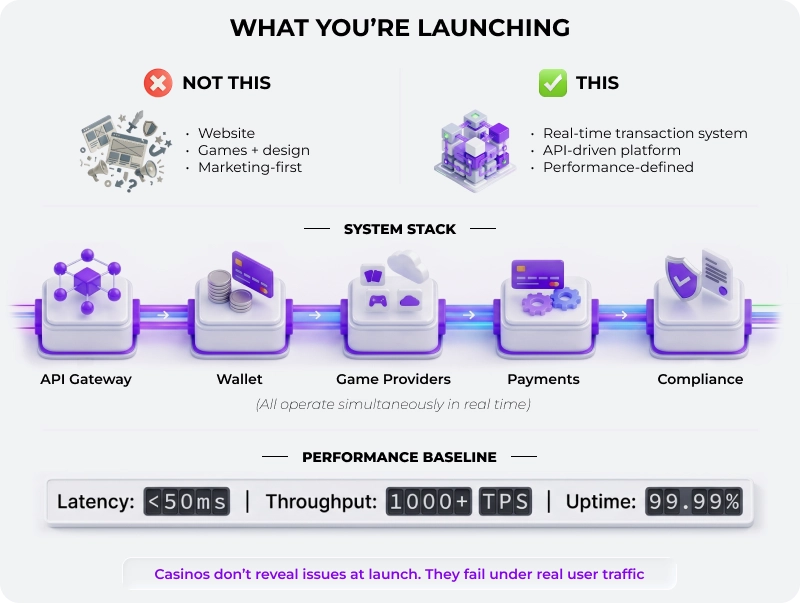
Starting in 2026 means treating the platform as a transaction engine, not a website. Every bet depends on how backend systems integrate, how the payment system processes requests, and how the infrastructure supports scale. Choosing the right online casino software provider, setting up customer support, and securing a gambling license are all determined by system performance. Platforms that operate within controlled latency ranges and handle requests without failure maintain accurate transactions and stable user sessions, even during peak traffic.
At a system level, launching an online casino involves coordinating multiple components that operate together under load:
- API gateway handling request routing and traffic distribution.
- Wallet system managing balances and real-time updates.
- Game providers delivering content and outcome logic.
- Compliance modules enforcing regulatory checks and reporting.
- Payment processing systems managing financial flows.
These components must operate concurrently, often processing thousands of requests per second. A delay in any layer can disrupt transaction flow and affect the entire platform. Operators evaluating turnkey solutions for online casino platforms should focus on how systems perform under real conditions. Integration depth, transaction speed, and response consistency directly influence accuracy, session stability, and long-term growth.
4 Decisions for a Successful Online Casino Launch
Building a scalable gambling business in 2026 starts with decisions that go beyond a standard business plan. Before you get an online gambling license, you are already shaping how your platform will operate under load. These decisions affect not only gaming performance but also expansion into verticals like sports betting. Infrastructure must also support responsible gambling controls and adapt to each target market, which introduces system complexity from the very beginning.
Decision 1. Your Gambling License Defines System Requirements
Where you operate determines how your systems behave. Jurisdictions like Malta require deeper compliance frameworks compared to faster-entry regions such as Curacao. These differences affect both legal positioning and how your platform processes data and validates transactions.
Each jurisdiction introduces specific technical requirements that must be built into the platform from the start:
- KYC and AML validation flows.
- GLI-19 RNG certification requirements.
- Jurisdiction-specific data handling.
In practice, getting a gambling license before defining system capabilities introduces inefficiencies that are difficult to correct later. Platforms built without alignment between licensing and architecture often require reconfiguration of core systems, increasing complexity, slowing down transaction processing, and limiting scalability across different markets.
Decision 2. Platform Architecture (Build vs Buy vs Turnkey)
Once licensing constraints are defined, architecture becomes the layer that determines how effectively the platform operates within those boundaries. Architecture defines performance limits. Whether using a custom build or a white label online casino solution, operators must evaluate how systems scale under load and how dependencies behave during peak activity.
At a system level, architecture is not a visual structure. It is a set of decisions that control how services process requests and recover from failure:
- Monolithic vs modular architecture.
- API dependency across services.
- Latency benchmarks (<50ms optimal, >100ms risk).
Selecting a low-cost solution without performance validation introduces long-term scaling constraints that are difficult to reverse once the platform is live. Systems built without considering load behavior often rely on tightly coupled services, which increases latency under stress and limits the ability to scale into new markets and higher transaction volumes.
Decision 3. Payment and Wallet Infrastructure
When platform architecture is defined, transaction handling becomes the most sensitive layer of the system. Most operational issues appear in this stage because every user action (deposit, bet, or withdrawal) depends on accurate, real-time synchronization between services. The wallet system must update balances instantly while maintaining consistency across all integrations, even under high concurrency.
This requires precise coordination between multiple transaction components:
- Transaction flow coordination.
- Retry logic and timeout handling.
- Risk of duplicate bets and desynchronization.
Reliable iGaming payment methods and integration depth are critical to avoid financial inconsistencies. Systems that lack proper synchronization logic often create subtle mismatches between transaction states. This, in turn, can accumulate over time and lead to disputes and reduced trust in platform accuracy.
Decision 4. Retention and Game Logic Systems
Long-term performance depends on how players interact with the platform over time. Retention systems define revenue stability by shaping gameplay patterns, session length, and return frequency. Game behavior must align with both engagement goals and regulatory constraints. It requires careful configuration rather than static setup.
Retention is not driven by content alone; it is shaped by a combination of system-level parameters that control gameplay dynamics:
- RTP configuration (92–98%).
- Volatility balancing.
- Bonus and reward systems.
Operators who understand how popular casino slot themes interact with these mechanics can influence engagement without compromising system stability. When retention logic is aligned with gameplay design, platforms maintain consistent user activity and predictable revenue patterns, even as player behavior changes in different markets.
Launch an Online Casino in 2026 With a Scalable System That Handles Real Load
When you choose your B2B iGaming partner to start an online casino business, you are selecting how your casino website will execute transactions under real conditions. Every user action (slot spins and live casino interaction included) is processed through a sequence of services. Reliable software makes sure that each step in this process remains stable under increasing demand.
A typical request lifecycle follows a defined path:
- User input is received through the frontend.
- API gateway distributes the request.
- Game engine processes logic and returns the outcome.
- Wallet system updates transaction state.
- Response is delivered back to the user.
The following model illustrates a typical high-performance system setup:
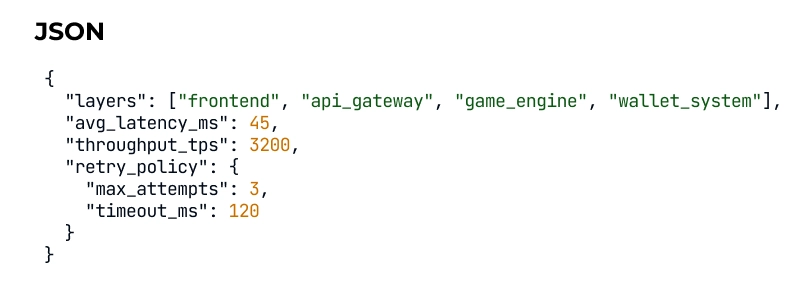
This model shows how different system layers interact and how performance is measured. REST APIs manage structured communication, while WebSocket maintains continuous connections for real-time updates in live casino gameplay.
For casino operators, these protocols directly affect responsiveness and consistency. Systems designed this way can support advanced scaling requirements, including expansion into sweepstakes casino infrastructure, while maintaining transaction accuracy.
Start Your Own Online Casino With the Right Budget Expectations
Entering the casino market requires realistic expectations around investment. The online casino software price depends on a multitude of factors, such as: platform type, integrations, and regulatory scope. This price, however, rarely reflects the full financial picture of launching a gambling company. Most first-time operators underestimate how different components contribute to overall spend.
Most operators allocate resources to several main components:
- Licensing: $15K–$100K+ depending on the chosen casino license.
- Platform: $10K to $50K+ depending on customization and provider.
- Payment integration: variable, often delayed by provider onboarding.
- Infrastructure: increases over time as traffic grows.
These figures represent general ranges rather than fixed values, as actual requirements vary by market and platform design. Many operators underestimate integration and compliance overhead, which can increase total spend beyond initial projections. For example, even a relatively accessible option like a Curacao gaming license cost can shift depending on legal structure, operational setup, and long-term scaling needs of the casino brand.
Performance Benchmarks That Define Success
When you invest in a gaming startup or plan starting an online gambling business, system performance becomes a measurable factor, not a theoretical one. Every delay affects user behavior, especially in real-time environments like live dealer gameplay. Even channels such as affiliate traffic are sensitive to platform responsiveness, as slower systems reduce conversion rates across the entire iGaming business.
*Ranges reflect typical platform performance and may vary by provider and configuration.
Falling below these benchmarks introduces instability at multiple levels. Delays in transaction processing reduce user confidence, while downtime disrupts sessions and affects revenue consistency. These issues create operational challenges over time, especially under regulatory pressure from evolving gambling laws.
Consistent performance reduces operational risk for casino operators and improves platform stability. It also lowers demand for reactive customer support in iGaming, creating a more predictable and scalable environment.
Compliance Systems That Cannot Be Ignored
When launching your online casino, compliance functions as part of the system logic rather than an external requirement. Modern iGaming regulations require platforms to track user activity, validate transactions, and store sensitive data in real time. This makes it crucial to use reliable casino software that already integrates these processes at the system level.
This is defined by recognized standards in practice. GLI-19 controls how game outcomes are tested and verified, while ISO 27001 defines how data must be stored, accessed, and protected. Some regulated environments use systems similar to LUGAS, which require continuous data synchronization between operators and regulatory systems. These requirements depend on accurate logging, structured audit trails, and real-time monitoring that operates in parallel with gameplay.
Compliance gaps usually appear as delays or system restrictions rather than direct errors. Strong technical support helps resolve these issues quickly, while properly implemented KYC and AML in online gambling processes maintain regulatory alignment without disrupting user activity.
Where Online Casino Systems Fail Under Real Conditions
When operating an online casino, most failures do not come from individual components, but from how they interact. At scale, every online casino API call connects multiple systems, including wallet, game providers, and session management. In a high-load online gaming business, these connections become points of risk, especially when delivering real-time game content across different environments.
Most failures occur at system boundaries, where dependencies must respond in sequence:
- API latency spikes can delay confirmations, leading to lost or unregistered bets.
- Wallet synchronization errors can create balance mismatches and trigger disputes.
- Poor provider orchestration can cause partial outages or inconsistent game availability.
These issues appear under real traffic conditions, often during peak activity. Even insignificant disruptions can affect player trust and your revenue. Resolving these problems requires both system-level monitoring and coordination between providers. Platforms built with clear separation between services can isolate failures and prevent them from affecting the entire system. This is critical when trying to attract investors for your iGaming business.
iGaming today is less like running a casino and more like conducting an orchestra where every instrument plays in milliseconds. If one section falls out of sync, the audience hears it instantly. The industry is now defined by systems that must stay synchronized while processing thousands of real-time transactions.

Denis Kosinsky
Chief Product Officer at NuxGame
How Long It Usually Takes to Launch an Online Casino
Timeline expectations for a new casino are often determined by system readiness and external approvals rather than frontend completion. Even when using readymade casino software or a white label casino model, delays typically occur before the system is fully operational. This is why casino owners should evaluate timelines based on process stages rather than marketing claims from any reliable software provider.
Licensing typically introduces the first delay, as approval processes vary by jurisdiction and documentation quality. Integration follows, where the casino site must connect to payment systems and external services. Testing then makes sure that transactions, game logic, and compliance checks perform correctly under load.
These phases often overlap, which makes exact timelines variable. When working with an online casino aggregator, additional coordination is required. It means timelines can extend depending on how provider systems are synchronized.
Bottom Line
Launching a casino platform today requires understanding how systems behave beyond initial setup. Performance, synchronization, and integration depth define whether the platform can sustain growth or encounter failure during real traffic conditions. Operators who approach this process with a system-first mindset reduce risk and create a foundation for growth.
Selecting an iGaming software platform should be based on how well it manages real-time processing, system dependencies, and failure scenarios. Solutions such as NuxGame are designed with this approach and aimed at helping operators scale without hidden limitations.